19th Century Base Ball
Wilmington, Delaware
About
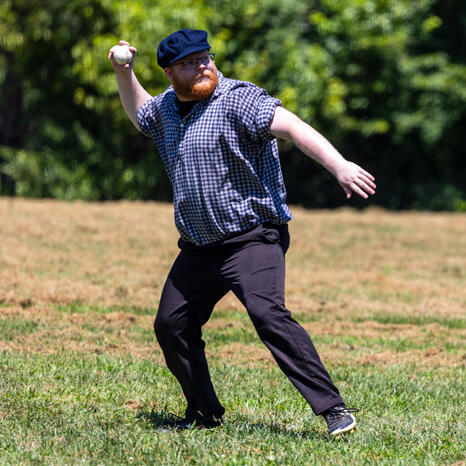
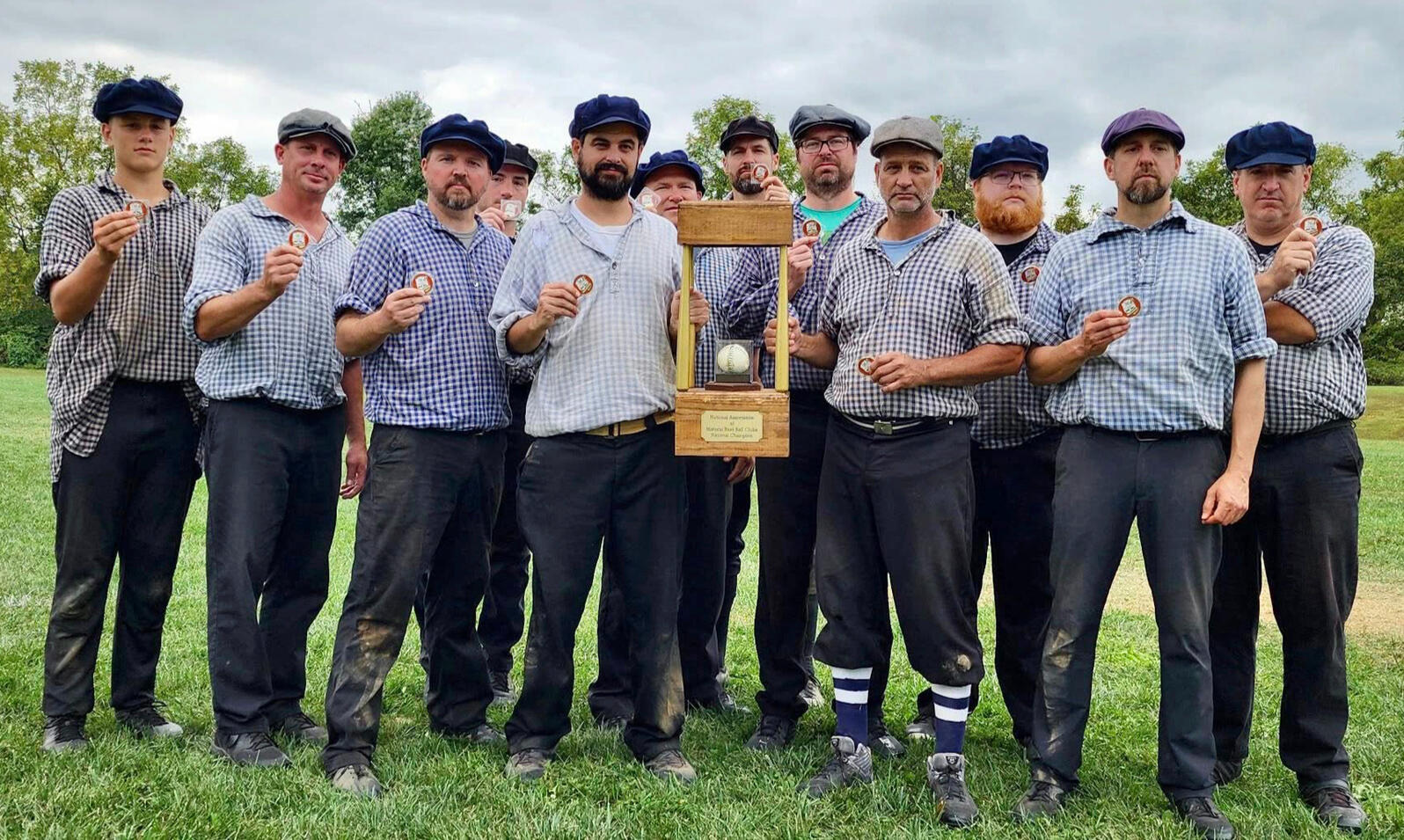
Diamond State Base Ball Club is a vintage base ball organization dedicated to bringing the 19th-century game back to life. Inspired by the original club of the same name—one of Delaware’s first organized teams—we take the field using period rules, uniforms, and equipment, giving players and spectators a true taste of baseball’s earliest days.We play the game the old-fashioned way: no gloves, underhand pitching, and a strong emphasis on fair play, camaraderie, and spirited competition. As proud members of the National Association of Historic Base Ball Clubs, we’re part of a growing community devoted to preserving and sharing the traditions of early base ball. You’ll find us playing matches at parks, museums, and historic sites, where history and sport come together in a lively and memorable way.Founded in 2008, Diamond State is all about celebrating the roots of the game—and having a great time doing it. While we emphasize fair play, comradery, and historical accuracy, the competition is a meaningful part of our approach. Diamond State proudly claimed both the 2018 National Silver Ball and 2026 National Association of Historic Base Ball Clubs tournament championships.Whether you’re looking to step onto the field or simply enjoy a match from the sidelines, Diamond State always welcomes new players and spectators to join us and experience base ball as it played in the mid-19th century.
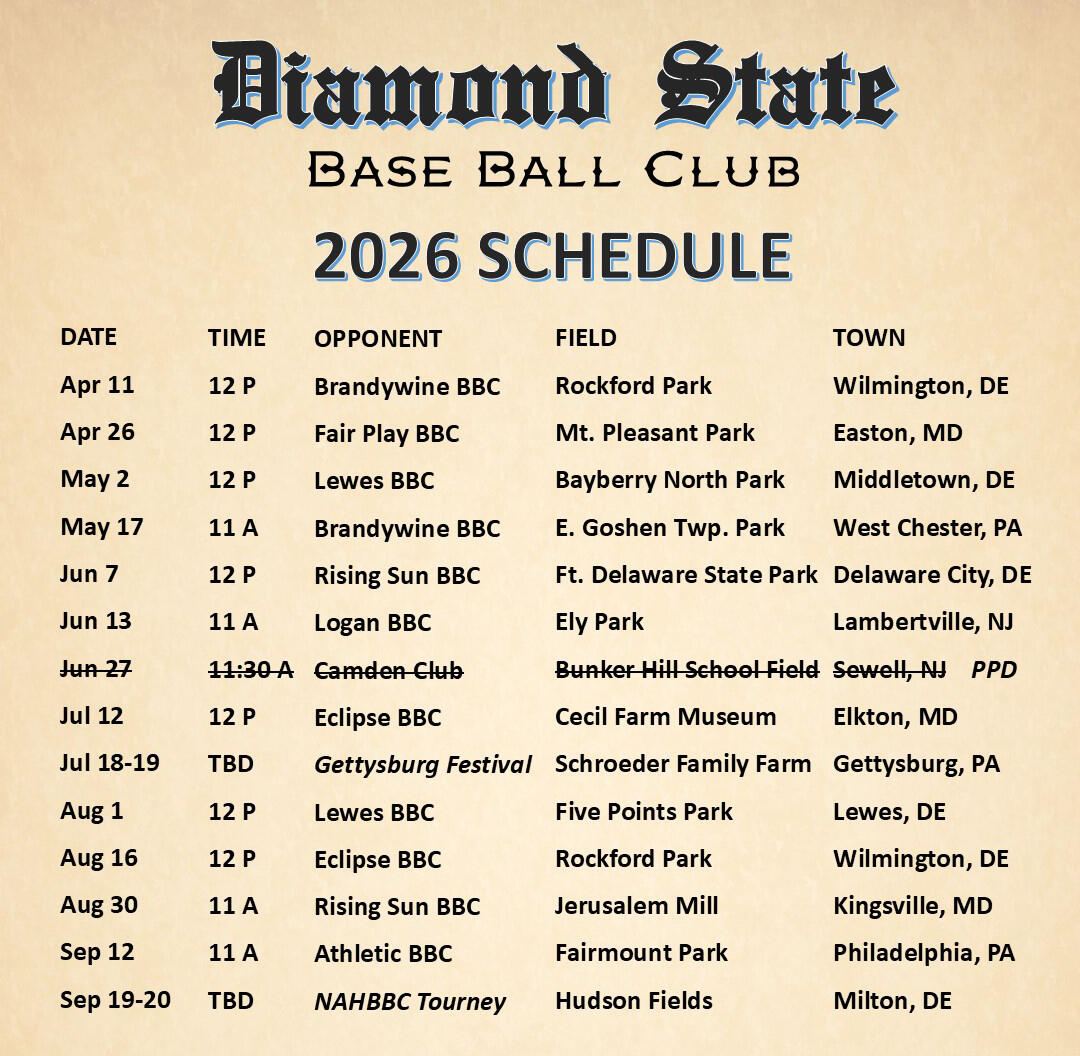
2026 SCHEDULE
2026 RESULTS
(Current Record 21-4)
2026 Delaware State Champions
| Date | Opponent | W / L | Score |
|---|---|---|---|
| 02-21 | Ft. Meyers-Bradenton Nine (FL) | W | 20-0 |
| 02-21 | at Awkward BBC of Central Florida | W | 10-1 |
| 02-21 | New England Nine | W | 7-1 |
| 04-11 | at Brandywine BBC of West Chester (PA) | W | 20-4 |
| 04-26 | at Fair Play BBC of Talbot Co. (MD) | W | 11-4 |
| 04-26 | at Fair Play BBC of Talbot Co. (MD) | W | 8-6 |
| 05-02 | Lewes BBC | W | 34-12 |
| 05-02 | Lewes BBC | W | 12-8 |
| 05-17 | Brandywine BBC of West Chester (PA) | W | 6-1 |
| 05-17 | Brandywine BBC of West Chester (PA) | W | 18-7 |
| 06-07 | Rising Sun BBC (MD) | W | 9-1 |
| 06-13 | at Logan BBC of Lambertville (NJ) | L | 8-7 |
| 06-13 | at Logan BBC of Lambertville (NJ) | W | 10-3 |
| 06-27 | at Camden Club (NJ) | PPD | PPD |
| 07-12 | at Eclipse BBC of Elkton (MD) | W | 16-3 |
| 07-12 | at Eclipse BBC of Elkton (MD) | W | 5-4 |
| 07-18 | at Gettysburg Generals BBC (PA) | L | 12-9 |
| 07-18 | Early Riser BBC of Detroit (MI) | W | 11-7 |
| 07-19 | Continental BBC of Kalamazoo (MI) | W | 16-4 |
| 07-19 | Canal Dover Redlegs (OH) | L | 7-6 |
| 08-01 | Lewes BBC | W | 15-5 |
| 08-01 | Lewes BBC | L | 11-10 |
| 08-16 | Eclipse BBC of Elkton | W | 13-7 |
| 08-16 | Eclipse BBC of Elkton | W | 4-1 |
| 08-30 | Rising Sun BBC | W | 13-7 |
| 08-30 | Rising Sun BBC | W | 15-7 |
2026 ROSTER
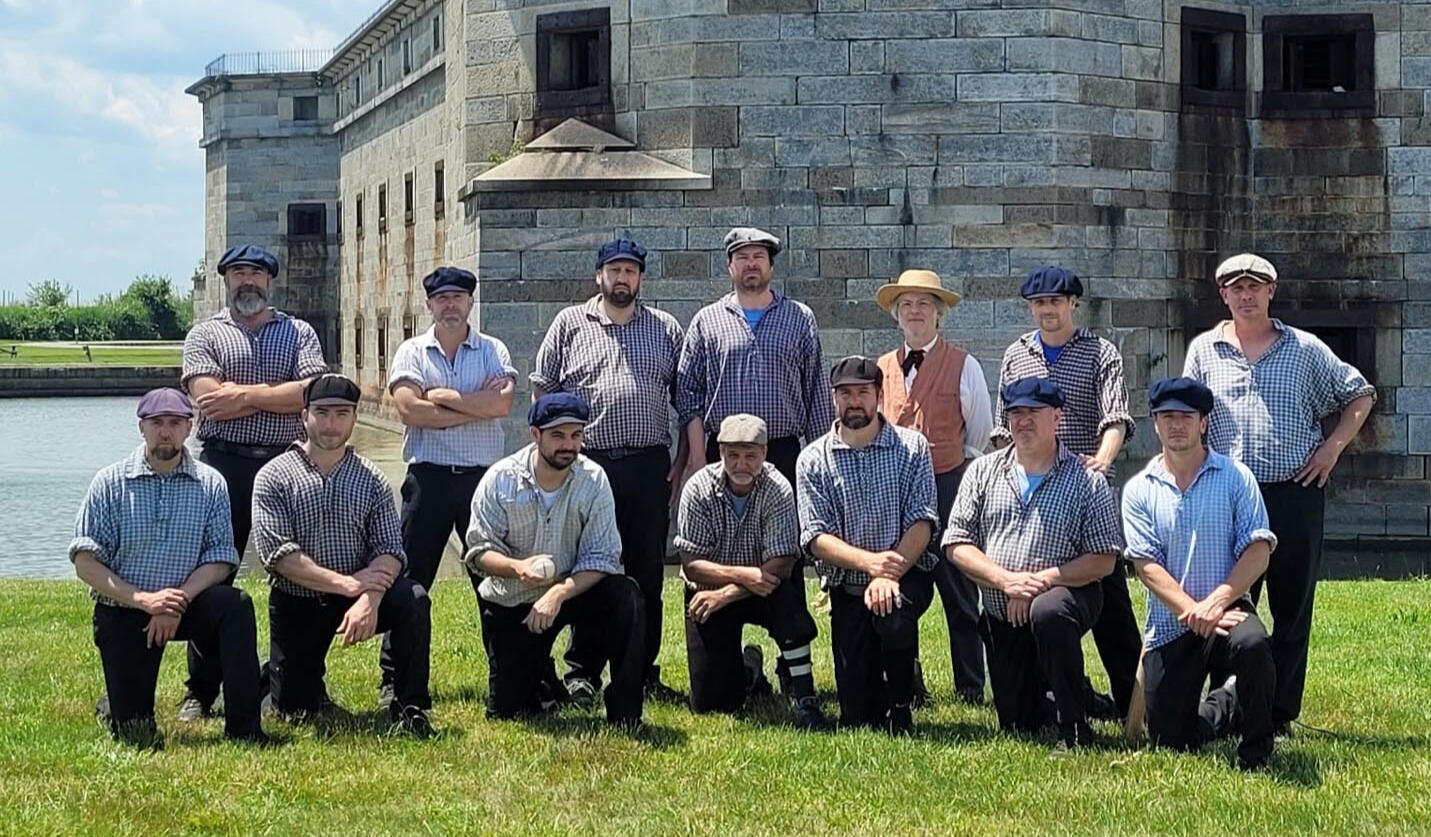
Brian “Triple B” Bartnicki
Matt “Black Bart” Bartnicki
Brian “Anchor” Betts
Ken “Buzz” Bonsall
Frank “Dutch” Brevoort
Adam Christian
TJ "Wheels" Connison
Patrick “Short Order” Cook
Jeremy “Colt” George
Keith “Boots” Glines
Sam “Iron” Hirzel
Jeff “Swampy” Kabacinski
Nate “Hawthorne” Kukulich
Constantin Livanov
Sonny “Dewey Devil” Maiorano
Alan “Slick” Menase
Tony “Tiger” Pallanta
Gavin “Spare” Ross
John “Strike” Ross
Mike "River" Spaziani
Craig “Growler” Wensell
Bob “Thunder” Zappaterrini
Rob “Lightning” ZappaterriniUMPIRES
Jeff "Swampy" Kabacinski
John "El Jefe" Medkeff
HISTORY
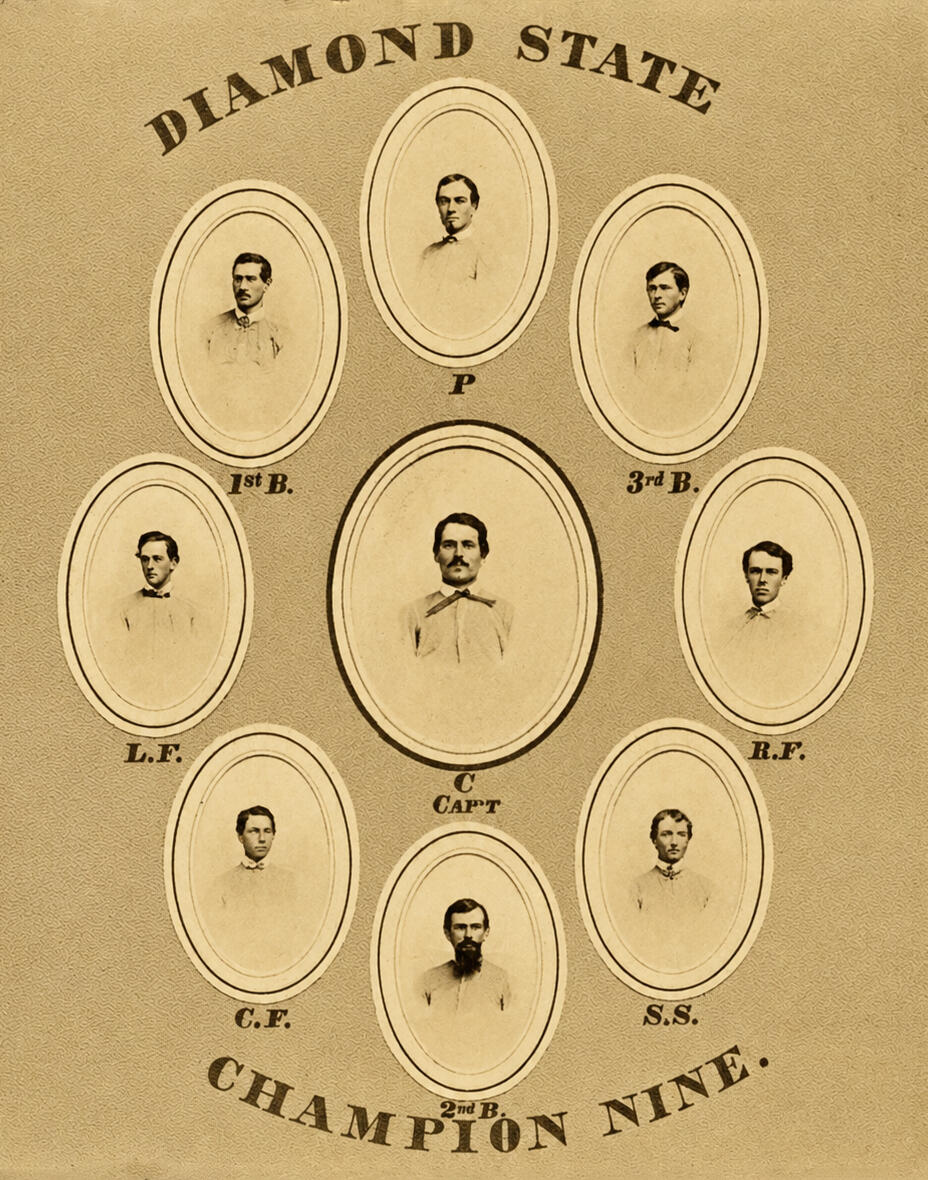
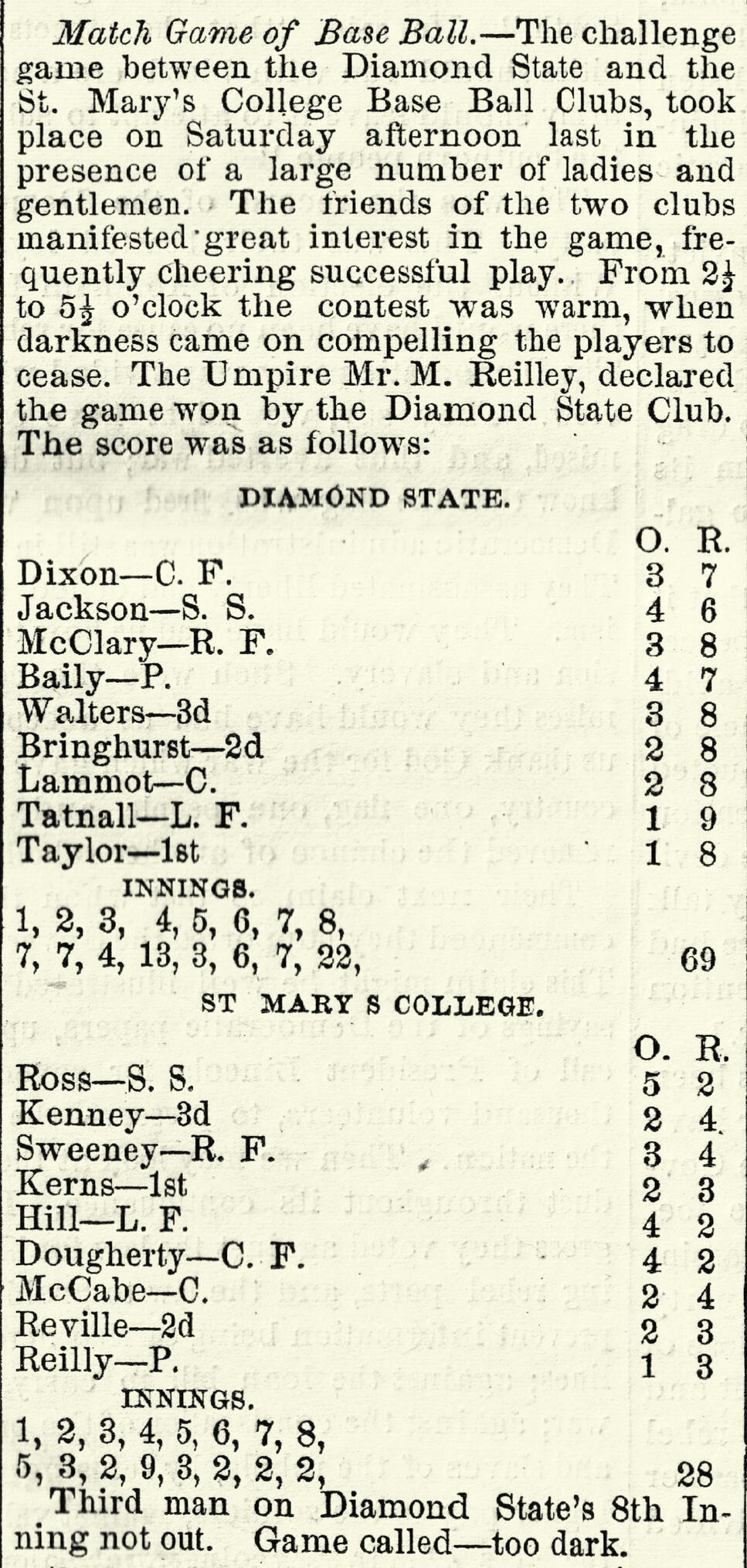
The Diamond State Base Ball Club of Wilmington was organized on October 2, 1865, amid the rapid growth of baseball in the years following the Civil War. The sport had evolved gradually from earlier bat-and-ball games played in America and Europe, while standardized rules were developed and popularized by clubs in the New York metropolitan area during the 1840s and 1850s. Diamond State was founded by attorneys, local merchants, and other businessmen who saw the game as a means of fostering community identity and civic pride. The young men who made up the club’s first and second nines were drawn largely from Wilmington’s commercial and professional classes, and most had little or no previous experience playing in organized baseball clubs.On October 7, 1865, just days after its founding, the Diamond State hosted the first recorded match in Delaware history between organized base ball clubs, defeating the boys of St. Mary’s College of Wilmington 69–26 at its grounds on the northwest corner of Delaware Avenue and Adams Street. Soon afterward, the inexperienced Wilmington club challenged the powerful Athletics of Philadelphia, one of the nation’s elite teams, and suffered a humbling 104–7 defeat on its home grounds. Despite these early struggles, the club quickly developed into one of Delaware’s strongest clubs.
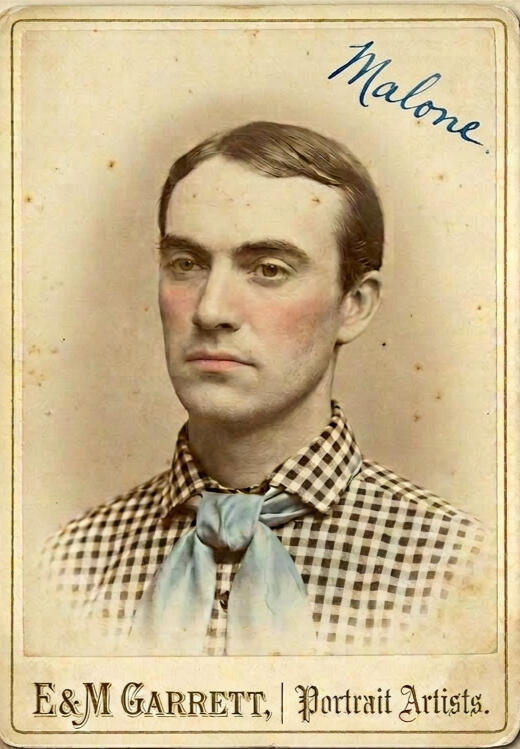
In 1866, Diamond State posted an impressive 17–2 record, defeating every Delaware opponent it faced and earning recognition as the state champion. The club also became the first in Delaware admitted to the National Association of Base Ball Players, the sport’s first governing body for organized base ball.Diamond State’s success reflected the rapid spread of organized base ball across Delaware, where new clubs formed not only in Wilmington but also in New Castle, Newark, Delaware City, Middletown, Smyrna, Dover, and Milford. In the years that followed, ball clubs formed in nearly every town in the state.The 1866 championship club’s most notable players were catcher and captain Andrew Gibney and pitcher Fergy Malone, both of whom had arrived from the Keystone Base Ball Club of Philadelphia. Malone never lost a game as Diamond State’s pitcher and later became one of the early stars of professional baseball, most notably as catcher for the 1871 world champion Athletic Base Ball Club of Philadelphia. He was among the earliest Irish-born players in the professional ranks and was regarded as an important pioneer in the development of the catcher position during baseball’s formative years. Malone later became one of a group of men who played, managed, and umpired professionally. Gibney had previously played for the Gotham Base Ball Club of New York before joining Diamond State and went on to a brief professional career with both the National and Olympic clubs of Washington.
Diamond State’s dominance proved short-lived. In 1867, they ceded the state championship to city rival, the Wawaset Club, and then disbanded. The club reorganized several times during the 1870s but never regained its former prominence, as stronger clubs, particularly the Wilmington Quicksteps, emerged. By 1878, the original Wilmington club had ceased to exist, but its legacy endured as one of Delaware’s pioneering baseball organizations and an important part of the state’s early sporting history.The “Diamond State” name itself briefly lived on with unrelated clubs organized in Newark in 1874 and Middletown in 1885, both of which lasted only a single season. In 2009, the name was revived by our New Castle County-based vintage base ball club, reconnecting with one of Delaware's earliest and most influential sporting organizations.
JOIN US
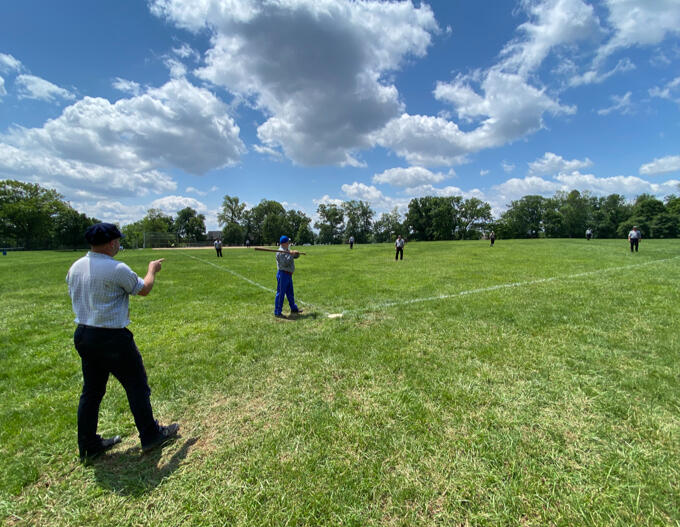
The Diamond State Base Ball Club is always seeking those interested in playing 19th century base ball, particularly those with prior experience with organized baseball or softball. All others are welcome to try out as well.If you’re not interested in playing but would like to help off the field with tally keeping, field set up, or other activities, we’d love to hear from you.Reach us at:
SPECTATOR GUIDE
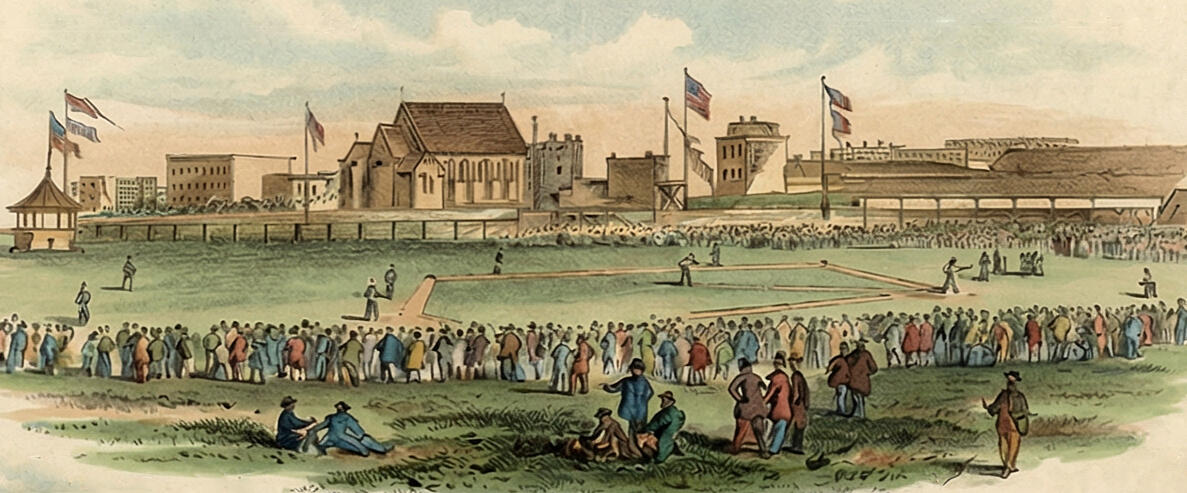
Diamond State generally plays using the 1864 National Association of Base Ball Players rules, giving you a glimpse of how the game looked over 160 years ago. Sometimes, by agreement, teams use rules from other years in the 1860s or 1870s.
Below are the key differences you’ll notice compared to modern baseball.
________________________________________
EQUIPMENT
• No gloves: Fielders catch bare-handed, so a bobble or muffed catch is normal.
• Balls: Slightly larger (9½" vs. modern 9") and stitched differently – and a single ball is used for an entire game.
• Bats: Longer, heavier, and less tapered than today’s bats.
• Bases: Smaller squares of canvas (12" each) at first, second, and third.
• Home plate: A flat, circular 9-inch white plate, unlike today’s pentagon-shaped plate.
________________________________________
FIELD
• Foul lines: Only marked from home plate to first and third bases (90 ft.).
• Foul flags: Placed further down the lines, 100 ft. from the bases, to mark territory that’s foul.
________________________________________
UMPIRING
• One umpire oversees the entire game from near home plate.
• Calls on runners at bases are made only if fielders request judgements.
________________________________________
STARTING THE GAME
• A coin flip decides which team bats first and which takes the field.
________________________________________
STRIKING
• The striker (batter) stands on a line through the center of home plate, extending 3 ft. on either side.
• Bunting is usually frowned upon, though not officially banned.
• The first striker of an inning is the player who follows the last out from the previous inning.
________________________________________
PITCHING
• The pitcher stands in a marked area 45–48 ft. from home plate (no mound).
• The ball must be thrown underhand to the striker.
________________________________________
BALLS & STRIKES
• If the pitcher throws unhittable pitches, the umpire may warn him, then call balls on subsequent bad pitches.
• If the striker refuses to swing at good pitches, the umpire may warn him, then call strikes.
• On the third ball, the striker is awarded first base, and all runners advance even if they are not forced.
• A striker is out after three strikes.
• Foul balls do not count as strikes.
________________________________________
WHEN THE BALL IS HIT
• An out can be made on a catch on the fly or a single bounce, including foul tips backward to the catcher.
• A fair ball touches the ground, a player, or an object inside the lines extending from home through first and third bases.
________________________________________
BASE RUNNING
• Runners cannot advance on foul balls.
• On a foul ball, a runner may be put out if the ball is returned to the pitcher and then thrown to the base before the runner returns. The pitcher can receive the ball anywhere on the field.
• The batter-runner can be tagged out if he overruns first base.
• There are no base coaches; teammates may call advice from the bench at any time.
________________________________________
TIPS FOR SPECTATORS
• Expect slower pitching but more strategic base running.
• Watch for catches on a bounce—they count as outs!
• Fielders play without gloves, so misses are part of the game.
• The game we play is equal parts competition, sportsmanship, and tradition.